You’re having 1-on-1s. They’re on the calendar. They happen.
But here’s the thing nobody tells you: most managers’ 1-on-1s are status updates wearing a disguise. You ask “how’s everything going?” They say “good.” You talk about the project deadline. You both leave wondering why that meeting exists.
Research from Gallup shows that the quality of the manager-employee relationship is the single strongest predictor of engagement — and 1-on-1s are where that relationship is built or broken. Yet most managers have never been taught how to have a conversation that goes deeper than task management.
I spent a year reading everything I could find about one-on-one meetings — from coaching frameworks to leadership theory to organizational psychology. Most of it was either too abstract (“be present!”) or too corporate (“leverage synergistic dialogue!”).
These five books are different. Each one changed something specific about how I run my 1-on-1s.
What made the cut:
- It had to change my behavior, not just my thinking
- It had to work for new managers, not just executives with 20 years of experience
- It had to be readable — under 250 pages or so structured that you can skim
- It couldn’t overlap with books I’ve already recommended in other reading lists
1. The Coaching Habit — Michael Bungay Stanier
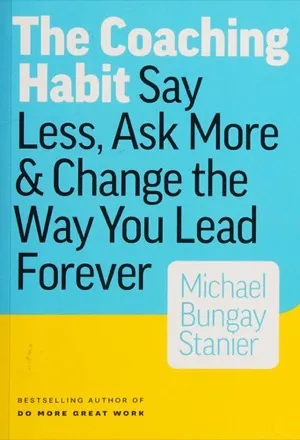
Published: 2016 · Pages: 248 · Rating: 4.6/5 · View on Amazon
Why it made the list
This is the book I wish I’d read before my first 1-on-1. It solves the #1 problem new managers have in meetings: you talk too much. You give advice too fast. You solve problems your team should be solving themselves.
Bungay Stanier’s premise is brutal in its simplicity: stop giving advice and start asking questions. But not vague questions — he gives you exactly 7 questions that do the heavy lifting:
- “What’s on your mind?” (the kickstart)
- “And what else?” (the single most useful coaching question ever)
- “What’s the real challenge here for you?” (cuts through surface noise)
- “What do you want?” (most people can’t answer this — that’s the point)
The genius is in the structure. Each question has a specific purpose, a specific moment to use it, and a specific trap it prevents. “And what else?” alone transformed my 1-on-1s — because the first answer someone gives you is almost never the real one.
The book is short, punchy, and immediately actionable. You’ll finish it in an afternoon and use it in your next meeting.
Best for you if…
You tend to jump into problem-solving mode the second someone brings you an issue. You want a repeatable structure that makes your 1-on-1s feel like coaching sessions instead of task reviews. You’re ready to talk less and listen more — but need specific tools to do it.
Key takeaway: “Can you stay curious a little bit longer? Can you slow down the rush to action and really sit in the question?“
2. Help Them Grow or Watch Them Go — Beverly Kaye & Julie Winkle Giulioni
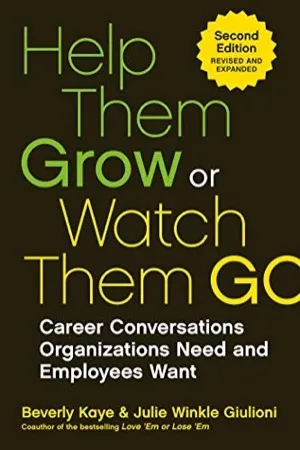
Published: 2019 (3rd edition) · Pages: 192 · Rating: 4.4/5 · View on Amazon
Why it made the list
Most managers treat career development as an annual event — something you discuss during performance reviews and then forget about for 11 months. This book reframes career conversations as something that should be woven into your regular 1-on-1 meetings.
The core framework is “Hindsight → Foresight → Insight”:
- Hindsight: What has the person already done? What skills do they have? What did they enjoy?
- Foresight: Where is the industry/company going? What opportunities are emerging?
- Insight: Given hindsight + foresight, what’s the realistic next step?
What I love about this book is that it doesn’t assume “growth” means “promotion.” It addresses lateral moves, skill deepening, stretch assignments, and even the honest conversation about when someone’s current role IS the right fit.
The title is the real message: if you don’t actively invest in your people’s growth through regular conversations, they’ll leave. And the best ones — the ones you can least afford to lose — will leave first.
Best for you if…
Your 1-on-1s feel productive but shallow — you cover tasks and projects but rarely talk about where someone is headed. You want to have career conversations but don’t know how to start them without it feeling forced. You’ve lost a good employee who said “there was no room to grow” and you never want to hear that again.
Key takeaway: “Career development doesn’t have to be a big event. It can happen in short conversations — five minutes here, ten minutes there — if you know what to ask.”
3. Multipliers — Liz Wiseman
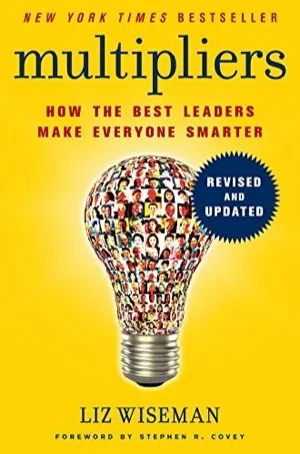
Published: 2017 (revised edition) · Pages: 304 · Rating: 4.5/5 · View on Amazon
Why it made the list
This book didn’t just change how I run 1-on-1s — it changed how I think about my role as a manager. Wiseman’s research divides leaders into two categories: Multipliers (who amplify their team’s intelligence) and Diminishers (who accidentally shut it down).
The uncomfortable revelation: most new managers are “accidental diminishers.” You jump in to rescue. You have all the answers. You think you’re helping — but you’re actually training your team to stop thinking.
In the context of 1-on-1s, this shows up everywhere:
- You ask a question, then answer it yourself before they can think
- You assign solutions instead of exploring the problem together
- You take over when someone struggles instead of letting them work through it
Wiseman’s framework gives you specific “Multiplier” behaviors: Debate Maker (pose challenges, not answers), Investor (give ownership and accountability), Challenger (extend people beyond what they think they can do). Each one is directly applicable to how you structure your 1-on-1s.
The chapter on “The Accidental Diminisher” is the one every new manager needs to read. It’s like looking in a mirror — and it stings.
Best for you if…
You suspect you’re doing too much of the thinking in your 1-on-1s. You notice your team waits for your opinion before forming their own. You want to move from being the person with all the answers to the person who asks the right questions. Pairs beautifully with The Coaching Habit.
Key takeaway: “Multipliers don’t get more with less — they get more by using more. More of people’s capability, more of their intelligence, more of their potential.”
4. Turn the Ship Around! — L. David Marquet
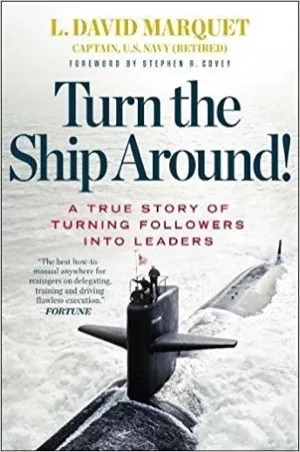
Published: 2013 · Pages: 236 · Rating: 4.6/5 · View on Amazon
Why it made the list
A nuclear submarine captain who decided to stop giving orders. That’s the premise — and it’s one of the most practical leadership books I’ve ever read.
Marquet took over the USS Santa Fe, the worst-performing submarine in the US Navy, and within a year it became the best. His method: replace “leader-follower” with “leader-leader.” Instead of people asking for permission, they declare intent: “Captain, I intend to submerge the ship.” Instead of orders flowing down, thinking flows up.
For 1-on-1s, this is transformative. Marquet’s model means your meetings shift from:
- “What should I do?” → “Here’s what I intend to do”
- “Can I have permission to…?” → “I’m planning to… unless you see a problem”
- “Tell me what’s next” → “Here’s what I think is next, and here’s why”
The practical mechanism is simple: push authority down to where the information lives. In your 1-on-1, that means your direct report should be bringing the agenda, proposing solutions, and making decisions — while you provide context, ask clarifying questions, and clear obstacles.
The book also covers the two pillars that make this work: competence (people need the skills to make good decisions) and clarity (people need to understand the organization’s purpose). Without both, empowerment becomes chaos.
Best for you if…
Your 1-on-1s feel like your direct reports are waiting for you to tell them what to do. You want to delegate more effectively but don’t know how to build the trust for that. You want a leadership philosophy backed by measurable results (10 out of Marquet’s officers went on to become submarine captains themselves).
Key takeaway: “Don’t move information to authority. Move authority to the information.”
5. The Fearless Organization — Amy C. Edmondson
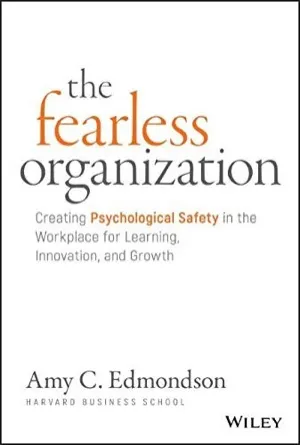
Published: 2018 · Pages: 256 · Rating: 4.5/5 · View on Amazon
Why it made the list
Here’s the thing about 1-on-1s: they only work if people tell you the truth. And most people won’t — because they don’t feel safe enough.
Amy Edmondson coined “psychological safety” based on her research at Harvard, and this book is the definitive guide. She shows that the highest-performing teams aren’t the ones that make fewer mistakes — they’re the ones where people feel safe to report mistakes, ask questions, and disagree.
For your 1-on-1s, this means the quality of information you get is directly proportional to the safety you’ve created. If your direct reports only tell you good news, that’s not loyalty — it’s fear.
Edmondson provides specific tactics for building safety:
- Frame the work as a learning problem, not an execution problem
- Acknowledge your own fallibility — “I may miss something. I need to hear from you.”
- Model curiosity — ask questions to understand, not to judge
- Respond productively to bad news — your reaction when someone brings a problem determines whether they’ll bring the next one
The chapter on what happens when psychological safety is absent — the disasters at Volkswagen, Wells Fargo, and Nokia — makes the case that this isn’t soft skills fluff. It’s a business survival issue.
If you’ve ever wondered why your team doesn’t open up in 1-on-1s, this book tells you why — and exactly how to fix it.
Best for you if…
You sense your team is holding back — they tell you what you want to hear, not what you need to hear. You want to understand why some managers get honest conversations and others get performance theater. You’re ready to look at your own behavior and ask: “Am I making it safe for people to be honest with me?”
Key takeaway: “Psychological safety is not about being nice. It’s about giving candid feedback, openly admitting mistakes, and learning from each other.”
Quick comparison: Which book does what?
| Book | Best for | Core framework | Pages | Rating |
|---|---|---|---|---|
| The Coaching Habit | Asking better questions | 7 Essential Questions | 248 | 4.6/5 |
| Help Them Grow | Career development conversations | Hindsight → Foresight → Insight | 192 | 4.4/5 |
| Multipliers | Stopping “accidental diminishing” | Multiplier vs. Diminisher behaviors | 304 | 4.5/5 |
| Turn the Ship Around | Empowering your team to lead | Intent-based leadership (I intend to…) | 236 | 4.6/5 |
| The Fearless Organization | Getting honest answers | Psychological safety framework | 256 | 4.5/5 |
Which one should you read first?
If your 1-on-1s feel like status updates and you want an immediate fix: Start with The Coaching Habit. Seven questions. You’ll use them tomorrow. It’s the fastest path from “so how’s everything going?” to conversations that actually surface real issues.
If you’re good at task talk but avoid career conversations: Start with Help Them Grow or Watch Them Go. It’s short, practical, and will give you a framework for the conversations you’ve been putting off. Your team wants these conversations — they’re just waiting for you to start them.
If you suspect you’re talking too much and solving problems your team should solve: Start with Multipliers. It’ll hold up an uncomfortable mirror, but the shift from “answer-giver” to “question-asker” will make every meeting better — not just 1-on-1s.
If your team follows instructions but never pushes back or proposes ideas: Start with Turn the Ship Around. The intent-based leadership model is so simple you can implement it in your next 1-on-1: instead of “what do you need from me?” try “what do you intend to do?”
If your direct reports only tell you good news: Start with The Fearless Organization. The problem isn’t your questions — it’s that people don’t feel safe answering honestly. Fix the safety, and everything else follows.
Beyond books: Making your 1-on-1s actually work
Reading about 1-on-1s is the easy part. The hard part is showing up consistently — week after week — and doing the uncomfortable work of listening more than talking, asking more than telling, and sitting in silence when every instinct says “fill the gap.”
Before you pick a book, it helps to know what your 1-on-1s currently are. The are your 1-on-1s a waste of time? quiz is uncomfortable in a useful way, because the managers who are most confident theirs are fine tend to score worst on it. And if the honest problem turns out to be volume rather than technique, that you have more of these meetings than anyone could run well, the one-on-one load calculator shows what your cadence actually costs in hours per week before you commit to keeping it.
Here’s my advice after reading all five:
- Pick one book and one behavior to change. Don’t try to implement five frameworks at once. Start with “And what else?” from The Coaching Habit and use it for two weeks straight.
- Set a consistent cadence and never cancel. The fastest way to kill trust is to cancel 1-on-1s when you’re “too busy.” Your calendar says what you prioritize — make sure it says your team matters.
- Let them own the agenda. This is the single hardest shift. But once your direct reports start bringing the topics, you’ll know your 1-on-1s have leveled up.
- Track what you discuss. Not for surveillance — for continuity. Referencing something from last week’s conversation shows you were actually listening.
If you want ready-made templates to put this into practice — agenda structure, question bank, meeting tracker — the tools exist. But start with the mindset first. The best template in the world won’t help if you’re still running your 1-on-1s like status updates.
And if 1-on-1s are one piece of a larger first-year reading plan, our top 5 books for first-time managers is the canonical broader list — the five books that cover the whole transition (identity, trust, feedback, decisions), not just the 1-on-1 craft. The two lists pair: this one for the meetings themselves, that one for the role around them.
🧰 Want the complete 1-on-1 toolkit? The 1-on-1 Meeting Kit includes a 50+ question bank, weekly agenda template, and meeting tracker spreadsheet — everything you need to run conversations that build trust, surface problems early, and develop your team. All for $29.